Constellation names
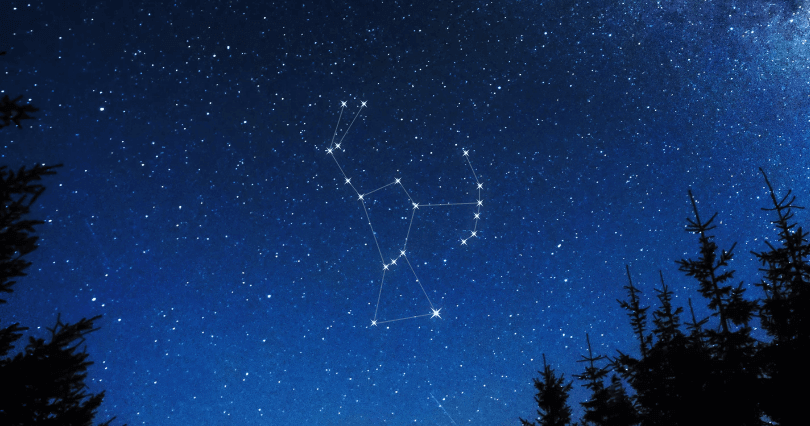
What is a constellation?
A constellation is a group of stars in the night sky that form a specific shape. The word comes from the Latin word constellātiō, which can be translated as “set with stars.” Astrology used this term at first for asterisms that were noted by Ammianus Marcellinus in the 4th century – they believed that all of them have a certain influence on humankind. The term, however, was not used that often before the 16th century. It is shown later on that the constellations are much larger than the asterisms in the night sky, an d the borders of all constellations were redefined in 1922. by International Astronomical Union.
NORTHERN HEMISPHERE
| NAME (LATIN) | NAME (ENGLISH) | SIZE (DEG2) | VISIBILITY | FIRST APPEARED | BRIGHTEST STAR |
|---|---|---|---|---|---|
| Andromeda | Andromeda | 722 | All year | Ancient | Alpheratz |
| Aries | The ram | 441 | Autumn | Ancient | Hamal |
| Auriga | The charioteer | 657 | Winter | Ancient | Capella |
| Boötes | The herdsman | 907 | Spring | Ancient | Arcturus |
| Camelopardalis | The giraffe | 757 | All year | 1612 (Plancius) | β-Cam |
| Cancer | The crab | 506 | Winter, Spring | 1687 (Hevelius) | Cor-Caroli |
| Canes Venatici | The hunting dogs | 465 | Winter, Spring | 1687 (Hevelius) | β-Cnc |
| Cassiopeia | Queen Cassiopeia | 598 | Autumn | Ancient | γ-Cas |
| Cepheus | King Cepheus | 588 | Autumn | Ancient | Alderamin |
| Coma Berenices | Berenice's Hair | 386 | Spring | 1536 (Vopel) | β-Com |
| Cygnus | The swan | 804 | Summer, Autumn | Ancient | Deneb |
| Delphinus | The dolphin | 189 | Autumn | Ancient | Rotanev |
| Draco | The dragon | 1,083 | Winter | Ancient | Eltanin |
| Equuleus | The little horse | 72 | Autumn | Ancient (Ptolemy) | Kitalpha |
| Gemini | The twins | 514 | Winter, Spring | Ancient | Pollux |
| Hercules | Hercules | 1,225 | Summer | Ancient | Kornephoros |
| Lacerta | The lizard | 201 | Autumn | 1690 (Hevelius) | α-Lac |
| Leo Minor | The lion cub | 232 | Winter, Spring | 1687 (Hevelius) | 46-LMi |
| Lynx | The lynx | 545 | Autumn | 1687 (Hevelius) | α-Lyn |
| Lyra | The lyre | 286 | Summer, Autumn | Ancient | Vega |
| Pegasus | The winged horse | 1,121 | Autumn | Ancient | Enif |
| Perseus | Perseus | 615 | Winter, Spring | Ancient | Mirfak |
| Sagitta | Arrow | 80 | Summer | Ancient | y-Sge |
| Triangulum | Triangle | 132 | Autumn | Ancient | β-Tri |
| Ursa Major | Great Bear | 1,280 | All year | Ancient | Alioth |
| Ursa Minor | Little Bear | 265 | All year | Ancient | Polaris |
| Vulpecula | Little Fox | 269 | Summer | 1687 (Hevelius) | a-Vul |
SOUTHERN HEMISPHERE
| NAME (LATIN) | NAME (ENGLISH) | SIZE (DEG2) | VISIBILITY | FIRST APPEARED | BRIGHTEST STAR |
|---|---|---|---|---|---|
| Antlia | The air pump | 239 | Spring | 1756 (Lacaille) | α-Ant |
| Apus | The bird of paradise | 206 | Summer | 1598 (Keyser & de Houtman) | α-Aps |
| Ara | The altar | 237 | Summer | Ancient | α-Ara |
| Caelum | The chisel | 125 | Winter | 1756 (Lacaille) | α-Cae |
| Canis Major | The greater dog | 380 | Winter | Ancient | Sirius |
| Capricornus | The sea goat | 414 | All year | Ancient | δ-Cap |
| Carina | The keel | 494 | All year | 1756 (Lacaille) | Canopus |
| Centaurus | The Centaur | 1,060 | All year | Ancient | Rigil-Kentaurus |
| Chamaeleon | The chameleon | 132 | Summer | 1598 (Keyser & de Houtman) | α-Cha |
| Circinus | The pair of dividing compasses | 93 | Summer | 1756 (Lacaille) | α-Cir |
| Columba | The dove | 270 | Winter | 1592 (Plancius) | Phact |
| Corona Australis | The southern crown | 128 | Summer | Ancient | α-CrA |
| Corvus | The crow | 184 | Spring | Ancient | Gienah |
| Crater | The cup | 282 | Spring | Ancient | δ-Crt |
| Crux | The southern cross | 68 | All year | 1598 (Plancius) | Acrux |
| Dorado | The goldfish | 179 | Winter | 1598 (Keyser & de Houtman) | α-Dor |
| Fornax | The furnace | 398 | Autumn, Winter | 1756 (Lacaille) | α-For |
| Grus | The crane | 366 | Autumn | 1598 (Keyser & de Houtman) | Alnair |
| Horologium | The pendulum clock | 249 | Winter | 1756 (Lacaille) | α-Hor |
| Hydrus | The lesser water snake | 243 | Winter | 1598 (Keyser & de Houtman) | β-Hyi |
| Indus | The Indian | 294 | Autumn | 1598 (Keyser & de Houtman) | α-Ind |
| Lepus | The hare | 290 | Winter | Ancient | Arneb |
| Libra | The balance | 538 | All year | Ancient (Roman) | Zubeneschamali |
| Lupus | The wolf | 334 | Summer | Ancient | α-Lup |
| Mensa | Table Mountain | 153 | Winter | 1756 (Lacaille) | α-Men |
| Microscopium | The microscope | 210 | Summer | 1756 (Lacaille) | γ-Mic |
| Musca | The fly | 138 | Summer, Spring | 1598 (Keyser & de Houtman) | α-Mus |
| Norma | The set square | 165 | Summer | 1756 (Lacaille) | γ²-Nor |
| Octans | The octant | 291 | Autumn | 1756 (Lacaille) | ν-Oct |
| Pavo | The peacock | 378 | Summer, Autumn | 1598 (Keyser & de Houtman) | Peacock |
| Phoenix | The phoenix | 469 | Winter | 1598 (Keyser & de Houtman) | Ankaa |
| Pictor | The painter's easel | 247 | Winter | 1756 (Lacaille) | α-Pic |
| Piscis Austrinus | The Southern fish | 245 | Summer | Ancient | Fomalhaut |
| Puppis | The stern | 673 | Winter | 1756 (Lacaille) | Naos |
| Pyxis | The compass | 221 | Winter | 1756 (Lacaille) | α-Pyx |
| Reticulum | The net | 114 | Winter | 1756 (Lacaille) | α-Ret |
| Sagittarius | The Archer | 867 | Summer | Ancient | Kaus-Australis |
| Scorpius | The Scorpion | 497 | All year | Ancient | Antares |
| Sculptor | Sculptor | 475 | Autumn, Winter | 1756 (Lacaille) | α-Scl |
| Scutum | The Shield | 109 | Summer | 1684 (Hevelius) | α-Sct |
| Telescopium | Telescope | 252 | Summer | 1756 (Lacaille) | α-Tel |
| Triangulum Australe | Southern Triangle | 110 | Summer | Ancient | β-Tri |
| Tucana | Toucan | 295 | Winter | 1598 (Keyser & de Houtman) | α-Tuc |
| Vela | The sails | 500 | Spring | 1756 (Lacaille) | γ²-Vel |
| Volans | Flying fish | 141 | Spring | Ancient | γ²-Vol |
BOTH HEMISPHERES
| NAME (LATIN) | NAME (ENGLISH) | SIZE (DEG2) | VISIBILITY | FIRST APPEARED | BRIGHTEST STAR |
|---|---|---|---|---|---|
| Antlia | The air pump | 239 | Spring | 1756 (Lacaille) | α-Ant |
| Aquarius | The water bearer | 980 | Autumn | Ancient | Sadalsuud |
| Aquila | The eagle | 652 | Summer, Autumn | Ancient | Altair |
| Canis Minor | The lesser dog | 183 | Winter, Spring | Ancient | Procyon |
| Cetus | The sea monster | 1,231 | Autumn | Ancient | Diphda |
| Eridanus | Eridanus | 1,138 | Winter | Ancient | Achernar |
| Hydra | The multi-headed water snake | 1,303 | Spring, Summer | Ancient | Alphard |
| Leo | The lion of Nemea | 947 | Spring | Ancient | Regulus |
| Monoceros | The unicorn | 482 | Winter | 1612 (Plancius) | α-Mon |
| Ophiuchus | The serpent bearer | 948 | Spring | Ancient | Rasalhague |
| Orion | The hunter | 594 | Winter | Ancient | Rigel |
| Pisces | The Fishes | 889 | Autumn | Ancient | η-Psc |
| Serpens | The Serpent | 637 | Summer | Ancient | η-Ser |
| Sextans | The Sextant | 314 | Spring | 1687 (Hevelius) | α-Sex |
| Taurus | The Bull | 797 | Winter | Ancient | Aldebaran |
| Virgo | Virgin | 1,294 | Autumn | Ancient | Spica |
Constellation History
The first documented and official list of constellations was the one by famous Greek astronomer Ptolemy. His Almagest from the 2nd century was based on the work of previous navigators, astronomers and astrologers, and records from Babylonian times. Ptolemy created a list of 48 constellations, and most of them were northern hemisphere constellations since he was not able to see all of them from Greece or Europe. Most of his constellations were known before to the mankind, like the Zodiac family of constellations and the Orion constellation, and there are stories in other cultures and civilizations that are proof of that. He named all of the constellations from his list by creatures or animals from Greek mythology and connected each of them with certain myths. Later on, many more constellations were discovered from the 15-18th century. All begins with the story of a Dutch fleet and their mission to the legendary Dutch fleet journey to the Spice Island. The ship was under Captain Keyser’s command and they went on a mission so the new t rade relationships could be created. During their journey, the position of 135 stars was measured. So me of them were never cataloged or depicted before, and these documents helped Peter Plancius recognize 12 new southern hemisphere constellations. His work was based on the research of several navigators from Holland, and later on, confirmed on Bayer’s Uranometria. After the telescope was invented, French astronomer de Lacaille named some of the southern hemisphere constellations that were not spotted or cataloged before. He liked naming them after the technical novelties and not after the animals or from Greek-Roman mythology. International astronomical union or shortly IAU described constellation as an area of the celestial sphere grouped in a specific shape from several stars and deep-sky objects. IAU di vided the constellations on the one located celestial, and the one in the northern and southern sky. The official record says that there are 88 known constellations, and thanks to the help of astronomer Eugèn e Delporte, boundaries between modern and ancient constellations were devised along vertical and horizo ntal lines. Most of the traditional constellations kept their names, but they were shortened – to this, many myths and tails from ancient civilizations were saved.